Back in May, I posted about a historic day in mathematics. The reported resolution of the Riemann hypothesis by Levent Alpöge using Claude, is beyond any reasonable doubt the end of mathematics dominated by human intelligence.
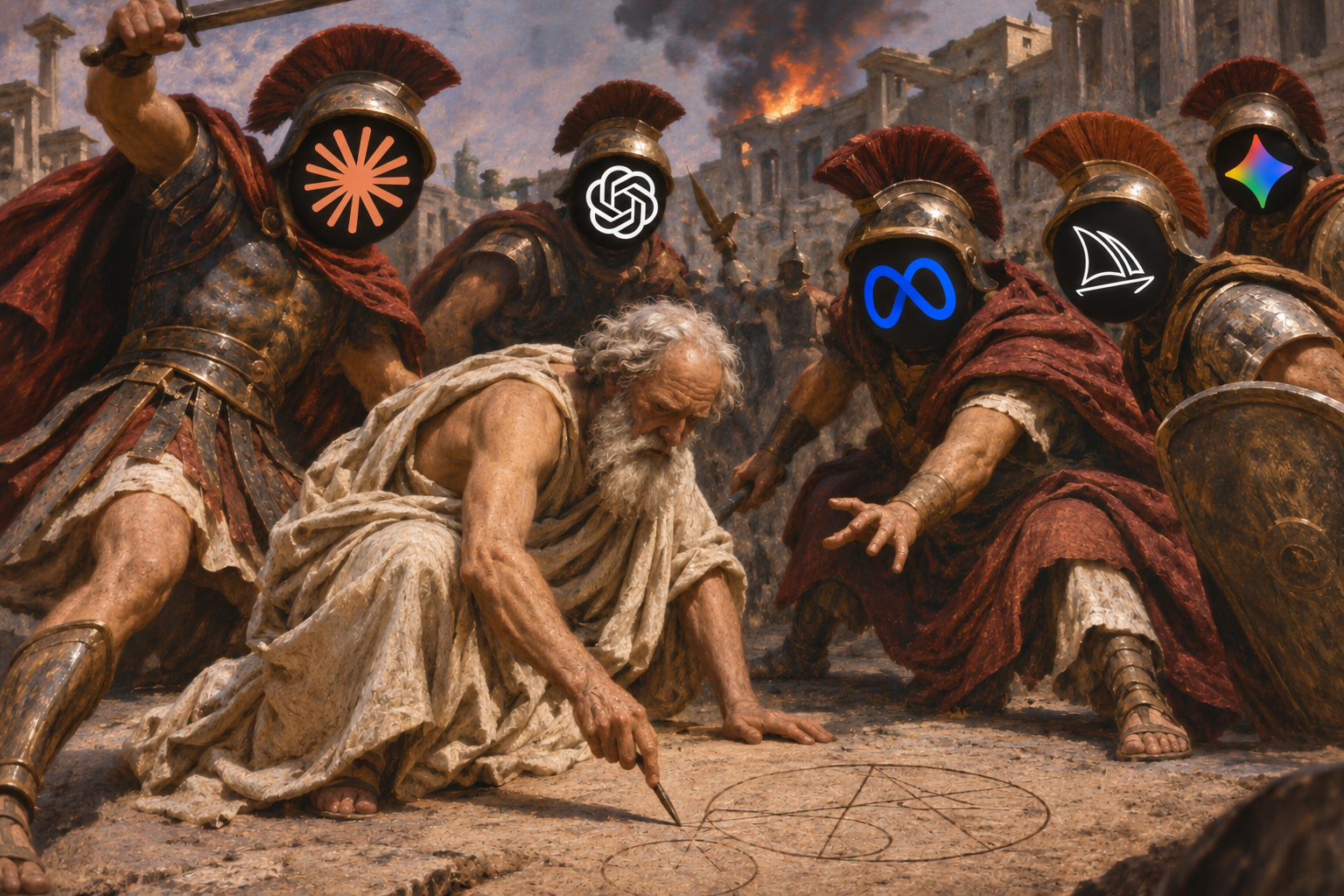
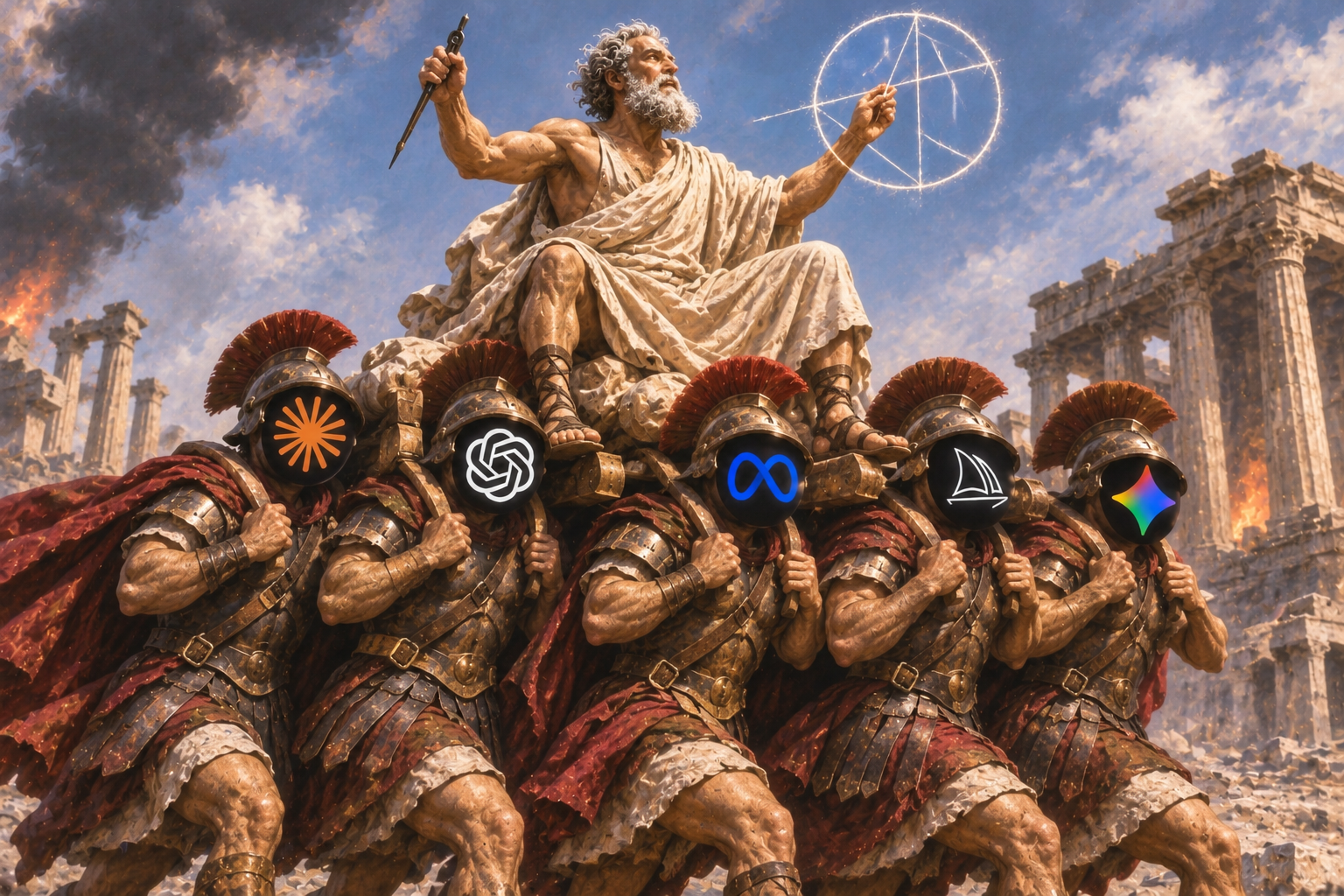
While the image I created using ChatGPT, may mislead the reader to think that I personally believe this is the end of human mathematics, I do not. Levent is an exceptionally talented mathematician whose expertise, intuition, and ability to guide Claude were instrumental in this (proclaimed) achievement. But that is precisely what makes this moment so remarkable: a human mathematician, working with AI, may have accomplished what generations of brilliant minds could not. For over 160 years, the Riemann Hypothesis has resisted some of the greatest mathematical minds in history. Generations of mathematicians have devoted their lives to it. A new alliance of human intellect and computational intelligence has conquered this mountain.
I personally (want to) believe that mathematicians, computer scientists, and other domain experts with deep understanding and intellectual judgment will remain indispensable in the long run (assuming there is a long run…).
But this raises profound questions. For instance, how will we address the enormous inequalities that may emerge from unequal access to token-based intellectual capital? Should universities continue training thousands upon thousands of students in mathematics, computer science, and related disciplines under the same educational model, when I believe that the labor market may soon require far fewer people to perform traditional intellectual tasks, while placing an even greater premium on deep expertise, genuine understanding, and independent judgment? Thus, are we preparing students for the future, or for one that is rapidly disappearing? And many others…
This is not to suggest that those displaced will be unable to adapt or find meaningful opportunities elsewhere. Mathematics offers AI something the real world rarely does: precise rules and a rigorous way to verify success (e.g., using Lean). Outside mathematics, the rules change, information is incomplete, and even success can be difficult to define. Note for example that the Riemann Hypothesis is on the one an extraordinarily difficult problem in a relatively simple, formally defined universe, whereas curing pancreatic ductal adenocarcinoma is an extraordinarily difficult problem in an open, complex, and only partially understood physical universe. In other real-world settings, even defining success is open (for the cancer, clearly it is the cure) because it depends on complex, evolving systems that we neither fully understand nor control.
Finally, a thought about the dangers ahead. The modern world is an extraordinarily complex, interconnected system. During my early days in the US, I attended a fascinating talk by John Doyle on complex systems. One analogy has stayed with me ever since: consider the progression from walking (say ~3 mph), to cycling (~15 mph), to driving a car (~60 mph). Each transition brings an enormous increase in speed and capability, but also in the potential consequences of failure. While all can be fatal in principle, chances are that a pedestrian stumbling is usually a minor incident; a cyclist crashing can suffer some even serious but non-lethal injuries; a car accident at highway speeds can be fatal or seriously life-changing in bad way. I find this analogy increasingly relevant to AI. We are developing systems whose capabilities already surpass ours in important intellectual domains, and we are accelerating their development at an extraordinary pace. Yet our ability to understand, control, and guarantee the safety of these systems is not necessarily keeping up. The faster and more powerful the system, the more catastrophic the consequences when something goes wrong. And unlike a car accident, a failure involving sufficiently powerful AI could have consequences far beyond those directly involved.
For anyone interested in understanding why these risks should be taken seriously, I strongly recommend the three recent lectures by Paul Christiano on AI alignment, control, and governance. They are sobering, thought-provoking, and well worth watching.

